FOR Americans who have been looking to Congress to reform the food system, these past few weeks have been, well, the best of times and the worst of times. A new politics has sprouted up around the farm bill, traditionally a parochial piece of legislation thrashed out in private between the various agricultural interests (wheat growers versus corn growers; meatpackers versus ranchers) without a whole lot of input or attention from mere eaters.
Not this year. The eaters have spoken, much to the consternation of farm-state legislators who have fought hard — and at least so far with success — to preserve the status quo.
Americans have begun to ask why the farm bill is subsidizing high-fructose corn syrup and hydrogenated oils at a time when rates of diabetes and obesity among children are soaring, or why the farm bill is underwriting factory farming (with subsidized grain) when feedlot wastes are polluting the countryside and, all too often, the meat supply. For the first time, the public health community has raised its voice in support of overturning farm policies that subsidize precisely the wrong kind of calories (added fat and added sugar), helping to make Twinkies cheaper than carrots and Coca-Cola competitive with water. Also for the first time, the international development community has weighed in on the debate, arguing that subsidized American exports are hobbling cotton farmers in Nigeria and corn farmers in Mexico. I highly encourage you to read the rest of it here>>>>>>
We need to keep the pressure up until it is no longer in our hands, click here to find out how to contact your state senators, not just about NAIS which these major food corps love, but the other BS that puts more money into their pockets.
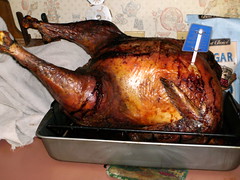
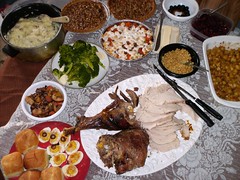
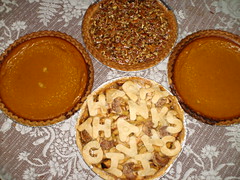
People have already begun to talk about eating local for their Thanksgiving meal. You can find the original 100 mile diet here.
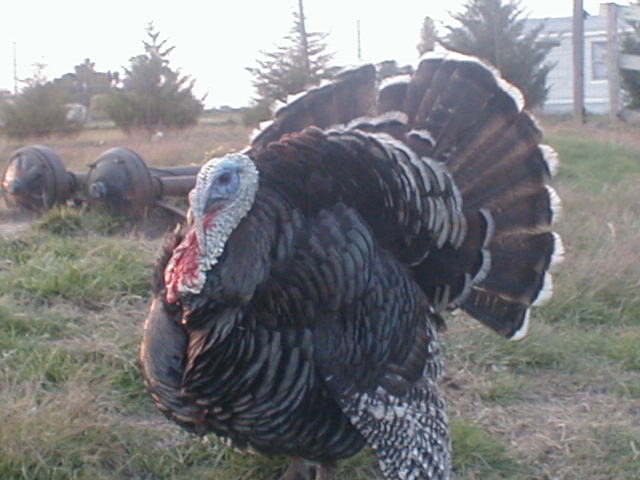
It can be difficult to make a typical traditional meal with only local ingredients. You have to get inventive. But you also need to do a little searching. Most your ingredients can be found locally. And then again, who says you have to have a turkey for Thanksgiving? As those of you that have read my article know, some people do ham, or even fish.
The biggest problem I have seen, or at least the one I get the most emails about, is local flour. Where and how do I find it? A web search can usually yield a result or two, and sometimes nothing at all. Basic rolls and desserts are hard to make without flour. So I am willing to make you a deal. We are going to barter. Those of you determined to make a local dinner but are unable to find flour, leave me a comment telling me what it is. I will do 1 of 2 things. First try to find you an alternative to your flour needs, failing that I will barter 1 of your abundant local food items for wheat. {this of course is purely imaginary barter} What will happen is that for every person I trade with, I will make one dish from that persons local food item. If you live in Washington State, and you need flour and are willing to trade me apples, I will make apple pie {see how this works, plus there are no local apples now because of the late hard freeze we had this year, so I need apples!} If I end up making 100 dishes, so be it, we like leftovers here.
And if it isn't flour you need, I have honey, sunflower seeds and oil as well as pecan. Think of this as emission credit trading.
So whose game? Of course I have a feeling that no one will. ~wry grin~
Oops, before I forget, Natures' Wheat and King Aurthur are made with Kansas wheat.