
Donate Now!

Buy a membership or koozies to help!
Saturday, August 26, 2006


Friday, August 25, 2006
Hot Water Bath; Green Beans
Nothing quite like the taste of homegrown green beans. And using a hot water bath adds that exotic flavoring of botulism.
Pressure canning is the only safe way to can your meats, and vegetables. Using Boiling Water Canners for these foods puts you at risk for botulism and poisoning. Fruits are fine in the hot water bath.
But I don't have a Pressure Canner? I would suggest blanching and freezing then. { to freeze, blanch green beans in boiling water for five minutes, drain and pat dry. Lay them out in a single layer in your freezer, leave for at least an hour before placing them into a container}But if you must, if your mind has been made up and you are going to use your Hot Water Bath to can green beans, I will keep you in my thoughts. Hard boil your hot packed jars for at least 90 minutes. Even with this amount of time, Clostridium Botulinum bacteria can survive and grow in the sealed jars. If your jars are sealed properly, don't taste them before cooking its contents. Boil your food for 10 minutes, uncovered {do this even if there is no signs of spoilage}
I DO NOT RECOMMEND USING A BOILING WATER BATH on anything but your fruits {tomatoes are a fruit}
The Open Kettle method. Pouring your hot foods into a jar, putting on a lid and not proccessing any further is called the Open Kettle method. I realize that many of generations have survived doing it this way, but it really isn't that safe. Low acid foods canned in this manner have the same chances of growing Clostridium Botulinum as the hot water bath ones. Even your high acid foods might spoil because of poor vacuum sealing. Even when you have sterilized everything, there is still the chance of re-contamination. So don't do it.
I have never used a steam canner, but I hear that the USDA doesn't recommend them. And I don't know who on this planet uses their dishwasher to can.
You safest bet is purchasing a Pressure Canner. I know they are expensive, but they do end up paying for themselves. As I stated in the Urban Homesteading; City food preservation, check out your local paper, internet, freecycle, estate auctions and boonie garage sales for the canners. Remember to take them to your local extension office after your purchase to make sure everything is proper.
Can your Own food, six reasons why by Phelan
edited 1/28/07 removed Amazon links, I am no longer with them
Pressure canning is the only safe way to can your meats, and vegetables. Using Boiling Water Canners for these foods puts you at risk for botulism and poisoning. Fruits are fine in the hot water bath.
But I don't have a Pressure Canner? I would suggest blanching and freezing then. { to freeze, blanch green beans in boiling water for five minutes, drain and pat dry. Lay them out in a single layer in your freezer, leave for at least an hour before placing them into a container}But if you must, if your mind has been made up and you are going to use your Hot Water Bath to can green beans, I will keep you in my thoughts. Hard boil your hot packed jars for at least 90 minutes. Even with this amount of time, Clostridium Botulinum bacteria can survive and grow in the sealed jars. If your jars are sealed properly, don't taste them before cooking its contents. Boil your food for 10 minutes, uncovered {do this even if there is no signs of spoilage}
I DO NOT RECOMMEND USING A BOILING WATER BATH on anything but your fruits {tomatoes are a fruit}
The Open Kettle method. Pouring your hot foods into a jar, putting on a lid and not proccessing any further is called the Open Kettle method. I realize that many of generations have survived doing it this way, but it really isn't that safe. Low acid foods canned in this manner have the same chances of growing Clostridium Botulinum as the hot water bath ones. Even your high acid foods might spoil because of poor vacuum sealing. Even when you have sterilized everything, there is still the chance of re-contamination. So don't do it.
I have never used a steam canner, but I hear that the USDA doesn't recommend them. And I don't know who on this planet uses their dishwasher to can.
You safest bet is purchasing a Pressure Canner. I know they are expensive, but they do end up paying for themselves. As I stated in the Urban Homesteading; City food preservation, check out your local paper, internet, freecycle, estate auctions and boonie garage sales for the canners. Remember to take them to your local extension office after your purchase to make sure everything is proper.
Can your Own food, six reasons why by Phelan
edited 1/28/07 removed Amazon links, I am no longer with them
If you have any questions feel free to ask. Just post you question in a reply to any of my posts. I will do my best to answer them.
Thursday, August 24, 2006
The Chicks are Here!
We ordered 25 chicks from McMurray Hatchery last week. They arrived this morning! {they give you one free chick with your order, total of 26}
 Everyone arrived alive and well
 The yellow one {in the back} is the odd one out, I assume that it is the exotic chick.

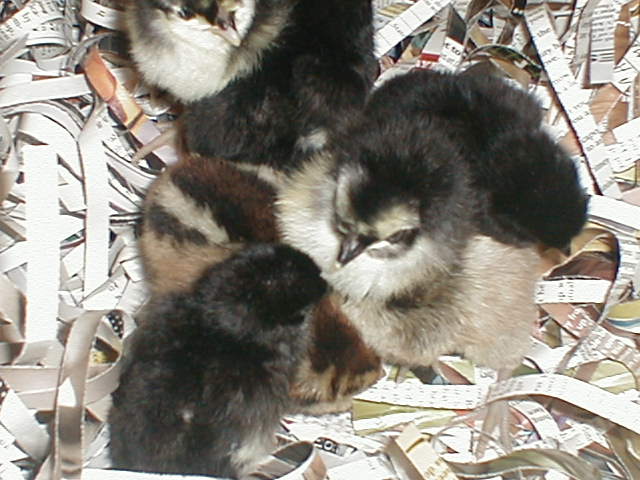 Everyone arrived alive and well
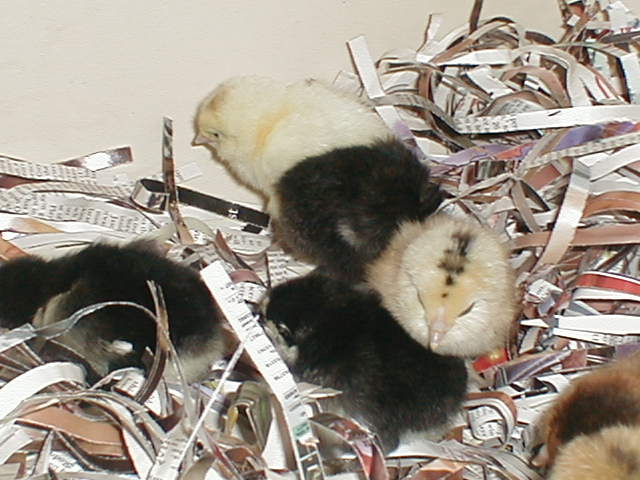 The yellow one {in the back} is the odd one out, I assume that it is the exotic chick.
The Sweet Potato and You
I received a phone call yesterday, someone was asking about sweet potatoes. My first thought was How did you get this number? But it's hard to keep your phone number away from your family, they always seem to find it.
 When your sweet potato vines start looking like this...STOP WATERING! They fair best when hot and dry. If you are suffering from a drought a quick watering once a week will suffice.
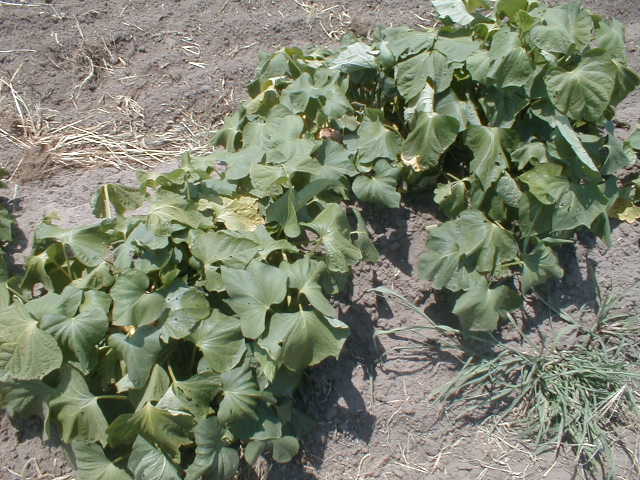 When your sweet potato vines start looking like this...STOP WATERING! They fair best when hot and dry. If you are suffering from a drought a quick watering once a week will suffice.
I realize that it is a little late into the season to talk about planting, but I figured that it's best to cover it all so that 1. you can pin point your mistakes and they will not become a bad habit. And 2. I don't have to re-write this next spring, I can link to it.
First we need to obtain our seed stock. Several ways to do that. Catalog, local supplier or by contacting the Extension Service to get a foundation seed stock.
Now for the soil. Nice fertile soil will get you a nice large yield, but a poor quality root, while too poor of a soil will get you a wonderful quality root, but low yield. You really need a happy medium. Perfect soil for the sweet potato is light and sandy, or silt loam, with a clay sub soil, good drainage and moderately fertile. Don't have that? We find an area that little plant life grows, and plant our sweet potatoes there, I prefer quality over quantity.
For an early crop plant in the spring as soon as the soil temp reaches 70f {21c} degrees. Any colder than that and your cutting will not fair well. Build rows about 3 feet {0.914m} wide and 1 foot{0.305m} high. Spacing the rows 3 feet {0.914m} apart. Plant your sprout four inches {10.16cm} deep, spacing them 12 inches { 30.48cm} apart.
Try not to weed to deeply, they do have shallow roots, once the vines start running, you will only need to pull weeds that pop up over the top.
After 130 - 150 days your sweet potatoes are ready. They do need to be pulled before your first hard frost. Start by using a potato fork, and digging up one hill to see if they are ready. Dig deep as you can find them up to 1 foot {0.305m} down, and make sure your soil is dry. If the root is underdeveloped or the skin is tender wait another 20 days before pulling them.
Once you have your crop in, separate the bruised ones, they need to be eaten soon. The others need to be initially stored in a well ventilated area at 85f {29c}for 15 - 20 days. After curing store them at temperatures between 80f-60f {26c-15c} never lower than 50f {10c}. Wrap them individually in newspaper when placing them into long term storage.
The simplest way to secure a new crop for the next year is to cut your runners. Planting one short vine in a hanging planter. Not only do you get a pretty houseplant, but you have your starters for next year ready for you.
Ok, so I lied. There is more to go over, but this is the basics that will get you through the rest of the season. In January I will talk more on this subject, just remind me.
You can read my article on why sweet potatos are the perfect food.
I have received a few queries on hot water baths and canning green beans. I will go over that subject tomorrow.
First we need to obtain our seed stock. Several ways to do that. Catalog, local supplier or by contacting the Extension Service to get a foundation seed stock.
Now for the soil. Nice fertile soil will get you a nice large yield, but a poor quality root, while too poor of a soil will get you a wonderful quality root, but low yield. You really need a happy medium. Perfect soil for the sweet potato is light and sandy, or silt loam, with a clay sub soil, good drainage and moderately fertile. Don't have that? We find an area that little plant life grows, and plant our sweet potatoes there, I prefer quality over quantity.
For an early crop plant in the spring as soon as the soil temp reaches 70f {21c} degrees. Any colder than that and your cutting will not fair well. Build rows about 3 feet {0.914m} wide and 1 foot{0.305m} high. Spacing the rows 3 feet {0.914m} apart. Plant your sprout four inches {10.16cm} deep, spacing them 12 inches { 30.48cm} apart.
Try not to weed to deeply, they do have shallow roots, once the vines start running, you will only need to pull weeds that pop up over the top.
After 130 - 150 days your sweet potatoes are ready. They do need to be pulled before your first hard frost. Start by using a potato fork, and digging up one hill to see if they are ready. Dig deep as you can find them up to 1 foot {0.305m} down, and make sure your soil is dry. If the root is underdeveloped or the skin is tender wait another 20 days before pulling them.
Once you have your crop in, separate the bruised ones, they need to be eaten soon. The others need to be initially stored in a well ventilated area at 85f {29c}for 15 - 20 days. After curing store them at temperatures between 80f-60f {26c-15c} never lower than 50f {10c}. Wrap them individually in newspaper when placing them into long term storage.
The simplest way to secure a new crop for the next year is to cut your runners. Planting one short vine in a hanging planter. Not only do you get a pretty houseplant, but you have your starters for next year ready for you.
Ok, so I lied. There is more to go over, but this is the basics that will get you through the rest of the season. In January I will talk more on this subject, just remind me.
You can read my article on why sweet potatos are the perfect food.
I have received a few queries on hot water baths and canning green beans. I will go over that subject tomorrow.
Wednesday, August 23, 2006
My fellow bibliophiles

from the FIRSTBOOK site:
"August 26-27, 2006
Print this coupon and bring to any Borders or Waldenbooks store on August 26-27, 2006, for a 10% discount on your purchase. Borders will donate 10% of the proceeds from your purchases to First Book, who will use those funds to provide new books for children nationwide. You will benefit not only from the 10% taken off your purchase, but from the knowledge that you personally are giving children from low-income families the opportunity to read and own their first new books. See coupon for details.
Help Us Publicize Borders and First Book Benefit Days
The more people who use this coupon, the more new books we can give to kids!"
So clicky clicky on the banner and get that coupon!
You Reek!
I know of farmers that stink. I run into one or two of them every month when I go into town. They usually smell of alfalfa and horse manure. A common smell in Kansas after a rain. But this isn't about them, this is a completely self centered blog and I must talk about myself.
The other day I took my oldest son into the city, he was in desperate need of shoes. I showered and changed {clean clothes} and we went to a shoe store. I knelt down to see where his toes were in a certain pair, when I smelled something very unappealing. Sigh I reek! Of course there was no way I was going to smell of sweet alfalfa, as we don't have that much growing, I smelled of onions and bacon and dirt. It's at this point where I realize that the under paid teenagers weren't turning there noses up at me because they were snobs, no....I stink.
It makes me worry about what my son smells like when he goes to school. Does he smell like what I had canned the day before?
There needs to be a disclaimer, or warning in the homesteading books. You'll smell like what you do. ALWAYS!
I should have known this, as my husband smells like gasoline and used oil when he comes home from work. It's not as bad now that he works {builds} motorcycles, as it was when he worked on cars. But the smell is there, lingering.
Speaking of smells...I did discover that the smell of gasoline on a woman is an aphrodisiac to some men. Grocery shopping earlier this month, I had to get gas for the mowers. The smell was all over my hands. As I walked around, gathering my essentials, men kept smiling at me, saying hi, nodding. I thought...are my panties showing, do I have a nipple poking out? Everything was were it should be, but why were all these men flirting with me?
Gasoline and breasts, a good combination. Onions and bacon, bad combination.
The other day I took my oldest son into the city, he was in desperate need of shoes. I showered and changed {clean clothes} and we went to a shoe store. I knelt down to see where his toes were in a certain pair, when I smelled something very unappealing. Sigh I reek! Of course there was no way I was going to smell of sweet alfalfa, as we don't have that much growing, I smelled of onions and bacon and dirt. It's at this point where I realize that the under paid teenagers weren't turning there noses up at me because they were snobs, no....I stink.
It makes me worry about what my son smells like when he goes to school. Does he smell like what I had canned the day before?
There needs to be a disclaimer, or warning in the homesteading books. You'll smell like what you do. ALWAYS!
I should have known this, as my husband smells like gasoline and used oil when he comes home from work. It's not as bad now that he works {builds} motorcycles, as it was when he worked on cars. But the smell is there, lingering.
Speaking of smells...I did discover that the smell of gasoline on a woman is an aphrodisiac to some men. Grocery shopping earlier this month, I had to get gas for the mowers. The smell was all over my hands. As I walked around, gathering my essentials, men kept smiling at me, saying hi, nodding. I thought...are my panties showing, do I have a nipple poking out? Everything was were it should be, but why were all these men flirting with me?
Gasoline and breasts, a good combination. Onions and bacon, bad combination.
Tuesday, August 22, 2006
Got It!
The problems of this world can be solved by simply throwing a few strawberries into the mix. If only that statement were true for anyone but myself. I solved the most pressing issue of our time, by just pureeing a few strawberries.
I solved the watermelon leather crisis of 2006.
Adding strawberries to the watermelon puree tamed the concentrated taste. I think it is the perfect blend. Of course my children will not eat it because it has seeds in it. Figures.
No tornadoes erupted yesterday. After the heavy rains, it was still surprisingly cool enough to open the house. I took that opportunity to bake 4 loaves, 36 muffins, and 12 tiny loaves of banana bread. The muffins disappeared mysteriously as soon as they were cool enough for little hands to handle. Some day I will have to get rid of that poltergeist.
Tomato worms have invaded the garden. This is cause for panic. It's not bad enough that they are coming in {the tomatoes that is} slowly, now the ones that are, are being eaten. I can't release the chickens in the garden now, it's too late for that. Chickens will eat the tomatoes along with the horn worms. What to do? What to do. I read the if you sprinkle corn meal around the plants, the hornworms will nibble on it and explode. Sounds like a plan to me. Off I went into the deepest jungle of Kansas, sprinkling my store bought corn meal here and there and everywhere. Unsure of how much was enough.
I haven't seen a horn worm in a few months {they turn into moths in July}, nor have I seen any tiny carnage. But I do see gigantic mutant grasshoppers that with the enlisted help of the mutant rolly pollies, are eating my ripe fruit. WILL I NEVER WIN!?! Rolly Pollies are the bane of my existence. Tell your children to be nice to bugs, Don't be like Phelan. Oh yes, it's neat when you first discover that rolly pollies scream when thrown into a B-B-Q, but they will take their revenge on you later in life. Learn the lesson well children. It will save your sanity and your garden.

I solved the watermelon leather crisis of 2006.
Adding strawberries to the watermelon puree tamed the concentrated taste. I think it is the perfect blend. Of course my children will not eat it because it has seeds in it. Figures.
No tornadoes erupted yesterday. After the heavy rains, it was still surprisingly cool enough to open the house. I took that opportunity to bake 4 loaves, 36 muffins, and 12 tiny loaves of banana bread. The muffins disappeared mysteriously as soon as they were cool enough for little hands to handle. Some day I will have to get rid of that poltergeist.
Tomato worms have invaded the garden. This is cause for panic. It's not bad enough that they are coming in {the tomatoes that is} slowly, now the ones that are, are being eaten. I can't release the chickens in the garden now, it's too late for that. Chickens will eat the tomatoes along with the horn worms.
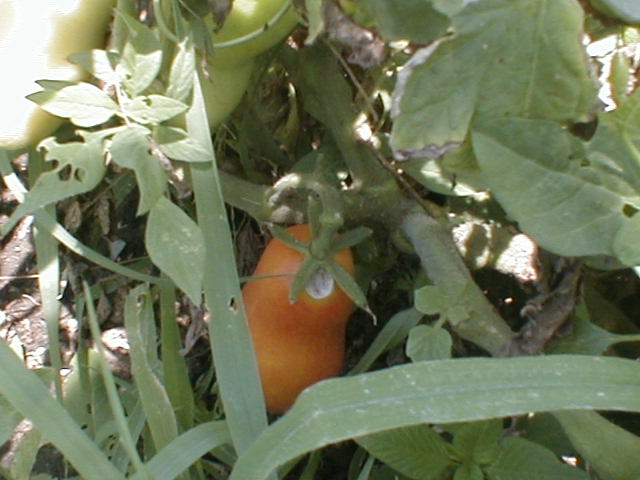 What to do? What to do. I read the if you sprinkle corn meal around the plants, the hornworms will nibble on it and explode. Sounds like a plan to me. Off I went into the deepest jungle of Kansas, sprinkling my store bought corn meal here and there and everywhere. Unsure of how much was enough.
I haven't seen a horn worm in a few months {they turn into moths in July}, nor have I seen any tiny carnage. But I do see gigantic mutant grasshoppers that with the enlisted help of the mutant rolly pollies, are eating my ripe fruit. WILL I NEVER WIN!?! Rolly Pollies are the bane of my existence. Tell your children to be nice to bugs, Don't be like Phelan. Oh yes, it's neat when you first discover that rolly pollies scream when thrown into a B-B-Q, but they will take their revenge on you later in life. Learn the lesson well children. It will save your sanity and your garden.
Monday, August 21, 2006
And They Said It Couldn't Be Done
Thunder is a pleasant sound to wake to, if you live in Kansas, in August, during a drought. This morning I hear the thunder, something that over the long dry days you forget what it sounds like. {Anyone else thinking, I ride through the desert on a horse with no name...} Looking out my window I see the telltale signs of hail. That is not a good sign. One problem is my garden, plants tend not to fair well when being pounded on with ice cubes. Another problem is that more often than not, hail here means a tornado. But wait! It's August, we are out of tornado season. I am hopeful that this menacing, looming doom is just a freak, and that we have not entered swing season prematurely.
Swing season? Yes, swing season. It's the time of year where mother nature can't make up her mind. She still enjoys the 90f degree {32c} temperatures one day, but the next her hot flash has turned into chills and you must suffer the 40f degree {4c} temperatures with her. This is when she is temperamental and we get tornadoes. Every year between winter and spring, summer and fall. Officially, Tornado season in Kansas is only in the spring, but we know and remember some nasty ones in November. I'd better bring Toto in the house.
I had a very busy weekend. As I told alrescate, canning season will be over soon, and we will get back to the more mundane things. With the new dehydrator at hand, I dried out some spinach and made Florentine. You'll be glad to hear that I waited for the noodles to dry, via food dehydrator {these things where invented for impatient people like myself}
 I ignored the recipes I was given and went with what I thought a good Florentine recipe should be. It worked, and I am happy I didn't blow it.
But what would this blog be without me screwing up. I brought in one ear of Hickory Corn. I felt the overwhelming desire to make corn nuts. Please tell me, that some one that reads this has a decent corn nut recipe they are willing to share with me! I couldn't find a recipe in the homesteading books, so I went the route of the internet. There seems to be all of 2 recipes floating around out there. I copied them and followed the directions. The "corn nuts" tasted like burnt, hollow popcorn shells. Good choice.
I needed fruit, apparently lots of fruit. I wanted berries, but that was not in the cards this weekend. The family piled into the car and we headed over to the "local pick your own" farm. Only to discover that they were no longer a "pick your own". Bummer. People had been destroying the trees. So the fruits were already picked and the berries and been turned into jams and butters. But I wanted to do that myself. I bought some pumpkin butter, as I have never had it before, and some honey. A half peck of apricots, a half peck of pears and 4 plums. The plums were promptly eaten.
Home again home again, where my husband ran outside to play with his new weed eater. I gathered eggs and tomatoes. Once inside, I smelled watermelon wine coolers. Something I don't drink. Panicky, I remembered the watermelon that my two youngest boys had poked holes in and I had set aside to deal with later. I found it where I had stashed it, fermenting. The only thing it was good for now, was leather.
Nothing in the books about watermelon leather. But it did talk about how to thicken up the very thin pureed fruits. Watermelon would fall into that category. I cut, sliced, removed seeds and slowly boiled until thought it was a good thickness {but what do I know?} Poured it on the leather sheet and placed it into the dehydrator. While waiting I remembered to search online. {thus I did} No recipes on making it, but I did find a forum that was talking about it. "No, you can not make watermelon leather. You would have to have a lot of melon because of the little amounts of pulp it contains." or..."mix it with some applesauce, that might work".
HA! I give you pure watermelon leather!

After 6 hours, it was firmed up enough to pick at.{ that's not mice nibbles or little fingers, that would be me taking the small chunk}
Did I by chance say pure? Pure concentrated watermelon. I felt the need to don a purple velvet jump suit and solicit others "psst, you want some? It's pure stuff man, can you dig?"
This stuff hurts your teeth. It's not the pleasant "pink" taste that you get from watermelon candies. oh no!
I like watermelon, but this...this was just too much.

I rolled it up anyway, just so I can say I did it. It's a little sticky, but I had rubbed some oil on the sheet before pouring the puree on it, that helped.
Now what to do about the taste. I don't want to add sugar, as it is sweet enough, plus I read that leathers that have sugar in them will crumble in storage. Maybe applesauce?
I do have 4 quarts of the puree waiting for me, and as it only took 1 cup to make the one leather, I have enough to play with, for a while.
Swing season? Yes, swing season. It's the time of year where mother nature can't make up her mind. She still enjoys the 90f degree {32c} temperatures one day, but the next her hot flash has turned into chills and you must suffer the 40f degree {4c} temperatures with her. This is when she is temperamental and we get tornadoes. Every year between winter and spring, summer and fall. Officially, Tornado season in Kansas is only in the spring, but we know and remember some nasty ones in November. I'd better bring Toto in the house.
I had a very busy weekend. As I told alrescate, canning season will be over soon, and we will get back to the more mundane things. With the new dehydrator at hand, I dried out some spinach and made Florentine. You'll be glad to hear that I waited for the noodles to dry, via food dehydrator {these things where invented for impatient people like myself}
 I ignored the recipes I was given and went with what I thought a good Florentine recipe should be. It worked, and I am happy I didn't blow it.
But what would this blog be without me screwing up. I brought in one ear of Hickory Corn. I felt the overwhelming desire to make corn nuts. Please tell me, that some one that reads this has a decent corn nut recipe they are willing to share with me! I couldn't find a recipe in the homesteading books, so I went the route of the internet. There seems to be all of 2 recipes floating around out there. I copied them and followed the directions. The "corn nuts" tasted like burnt, hollow popcorn shells. Good choice.
I needed fruit, apparently lots of fruit. I wanted berries, but that was not in the cards this weekend. The family piled into the car and we headed over to the "local pick your own" farm. Only to discover that they were no longer a "pick your own". Bummer. People had been destroying the trees. So the fruits were already picked and the berries and been turned into jams and butters. But I wanted to do that myself. I bought some pumpkin butter, as I have never had it before, and some honey. A half peck of apricots, a half peck of pears and 4 plums. The plums were promptly eaten.
Home again home again, where my husband ran outside to play with his new weed eater. I gathered eggs and tomatoes. Once inside, I smelled watermelon wine coolers. Something I don't drink. Panicky, I remembered the watermelon that my two youngest boys had poked holes in and I had set aside to deal with later. I found it where I had stashed it, fermenting. The only thing it was good for now, was leather.
Nothing in the books about watermelon leather. But it did talk about how to thicken up the very thin pureed fruits. Watermelon would fall into that category. I cut, sliced, removed seeds and slowly boiled until thought it was a good thickness {but what do I know?} Poured it on the leather sheet and placed it into the dehydrator. While waiting I remembered to search online. {thus I did} No recipes on making it, but I did find a forum that was talking about it. "No, you can not make watermelon leather. You would have to have a lot of melon because of the little amounts of pulp it contains." or..."mix it with some applesauce, that might work".
HA! I give you pure watermelon leather!

After 6 hours, it was firmed up enough to pick at.{ that's not mice nibbles or little fingers, that would be me taking the small chunk}
Did I by chance say pure? Pure concentrated watermelon. I felt the need to don a purple velvet jump suit and solicit others "psst, you want some? It's pure stuff man, can you dig?"
This stuff hurts your teeth. It's not the pleasant "pink" taste that you get from watermelon candies. oh no!
I like watermelon, but this...this was just too much.

I rolled it up anyway, just so I can say I did it. It's a little sticky, but I had rubbed some oil on the sheet before pouring the puree on it, that helped.
Now what to do about the taste. I don't want to add sugar, as it is sweet enough, plus I read that leathers that have sugar in them will crumble in storage. Maybe applesauce?
I do have 4 quarts of the puree waiting for me, and as it only took 1 cup to make the one leather, I have enough to play with, for a while.
Sunday, August 20, 2006
Urban Homesteading; City Food Preservation
Everything that I have done to preserve food {drying, canning, freezing} can be done in an urban environment. To acquire a pressure canner and jars, look in a local paper, an estate sale in the country, relatives, Freecycle, Internet and local stores. Once you have your canner, take it to the county extension office, they will test your seals and the weight gauge to see if they are correct/safe. {They do this free}
Now that you have your canner, dehydrator or cheese cloth and baking sheet, now what? Now you need to come up with the food to preserve. Urban and suburban homesteaders do not have the room required to grow the abundance of food needed to live harvest to harvest. Even rural Homesteaders can find themselves falling short because of the unpredictability of raising food stuffs.
You need to try to plan ahead. Take time to sit down and decided what types of veggies and fruits you eat the most, and how often. Still, once this is completed, you may fall short of the true amount. This is when your first year needs some experimenting. Keep a journal of how fast or slowly certain preserved foods go. This will help you the next year and the next.
Buying your fruits and veggies in bulk will run you cheaper than daily or weekly buying, even though your pocket book will groan with the one time expense. This can go back to planning ahead. Its apple season, and you really like apples. Of course you can by apples all year round at the market. But they are not fresh and are covered in pesticides. Either find a dealer at the farm market or road side, talk to them about your plans of preserving food. {Do you have that list? How many apple items will you be using?} If you are an apple pie addict and plan on canning your mom's apple pie recipe, make arrangements with the dealer for the next year. See if he would be willing to hold you required amounts ready for you. {Of course to seal the deal, buy as much as you need, or as much as he has right then and there} Some dealers will keep back the amount of apples {or other foods} for you. Talking to them before hand is good for the both of you. You are assured a certain amount of the finest apples, and the dealer has a secure buyer.
Most the grocery stores I have been in, will sell "about to turn bad" food items very cheaply. They rather see them go, then to throw them out. Here's your chance to get more of your food items. I wouldn't suggest canning old green beans, but blanch and freeze them instead. Other items can have the soft spots removed and used to can soups, stews, sauces, pie filling. You don't have to stay with fruits and vegetables, I will buy cream cheese when it's on sale so I can, "can" my Alfredo sauce.
Preserving food as a homesteader, no matter your locale, takes planning. Have an idea of the types of meals you would like to have over the next year or the few months between harvest. You'll need to set time aside so that you can prep and preserve your bulk food items. Be creative with your flavoring so that you don’t fall into a taste lull.
I wish you all luck in your food preservation endeavors. Just please, try and learn from my mistakes.
~~~~~~~~~~~~~~~
Editorial:
I switch to Blogger Beta and it ran havoc on the LiveJournal Syndication. I don't know about the others. I apologize for this, and if it happens again, please let me know. A Head's up, I will be playing with the layouts today. It's shouldn’t be a problem...but you never know.
Now that you have your canner, dehydrator or cheese cloth and baking sheet, now what? Now you need to come up with the food to preserve. Urban and suburban homesteaders do not have the room required to grow the abundance of food needed to live harvest to harvest. Even rural Homesteaders can find themselves falling short because of the unpredictability of raising food stuffs.
You need to try to plan ahead. Take time to sit down and decided what types of veggies and fruits you eat the most, and how often. Still, once this is completed, you may fall short of the true amount. This is when your first year needs some experimenting. Keep a journal of how fast or slowly certain preserved foods go. This will help you the next year and the next.
Buying your fruits and veggies in bulk will run you cheaper than daily or weekly buying, even though your pocket book will groan with the one time expense. This can go back to planning ahead. Its apple season, and you really like apples. Of course you can by apples all year round at the market. But they are not fresh and are covered in pesticides. Either find a dealer at the farm market or road side, talk to them about your plans of preserving food. {Do you have that list? How many apple items will you be using?} If you are an apple pie addict and plan on canning your mom's apple pie recipe, make arrangements with the dealer for the next year. See if he would be willing to hold you required amounts ready for you. {Of course to seal the deal, buy as much as you need, or as much as he has right then and there} Some dealers will keep back the amount of apples {or other foods} for you. Talking to them before hand is good for the both of you. You are assured a certain amount of the finest apples, and the dealer has a secure buyer.
Most the grocery stores I have been in, will sell "about to turn bad" food items very cheaply. They rather see them go, then to throw them out. Here's your chance to get more of your food items. I wouldn't suggest canning old green beans, but blanch and freeze them instead. Other items can have the soft spots removed and used to can soups, stews, sauces, pie filling. You don't have to stay with fruits and vegetables, I will buy cream cheese when it's on sale so I can, "can" my Alfredo sauce.
Preserving food as a homesteader, no matter your locale, takes planning. Have an idea of the types of meals you would like to have over the next year or the few months between harvest. You'll need to set time aside so that you can prep and preserve your bulk food items. Be creative with your flavoring so that you don’t fall into a taste lull.
I wish you all luck in your food preservation endeavors. Just please, try and learn from my mistakes.
~~~~~~~~~~~~~~~
Editorial:
I switch to Blogger Beta and it ran havoc on the LiveJournal Syndication. I don't know about the others. I apologize for this, and if it happens again, please let me know. A Head's up, I will be playing with the layouts today. It's shouldn’t be a problem...but you never know.
Subscribe to:
Posts (Atom)
